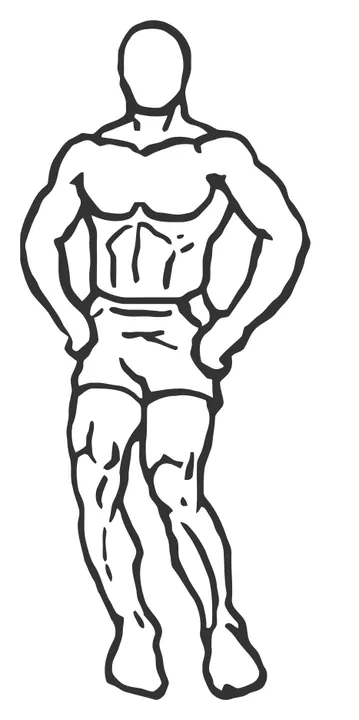
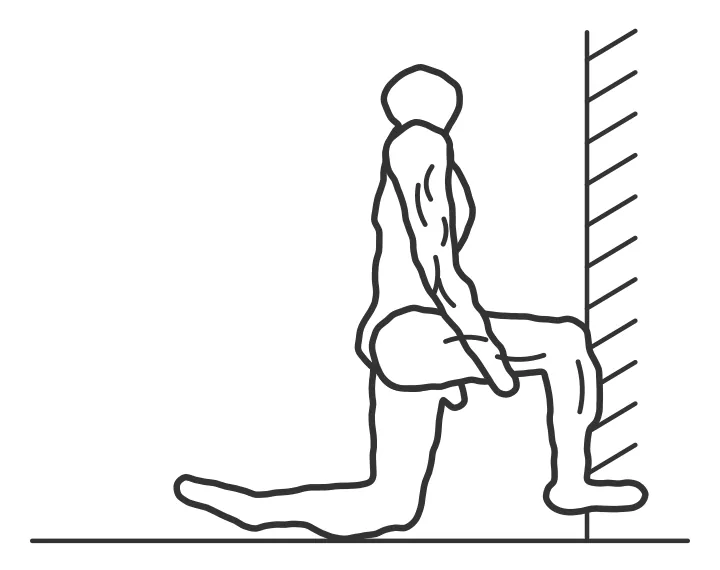
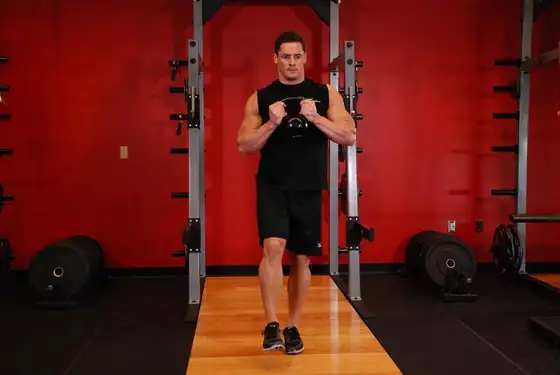
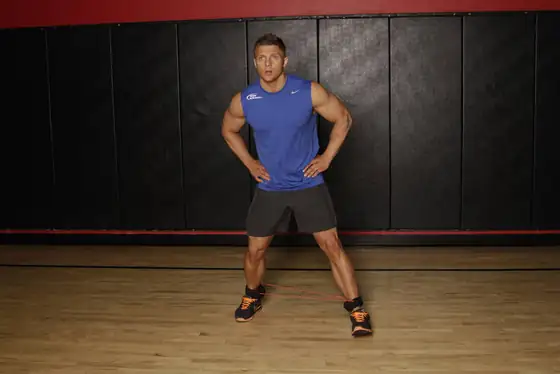
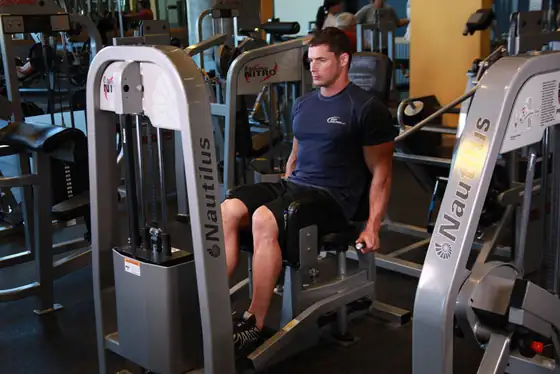
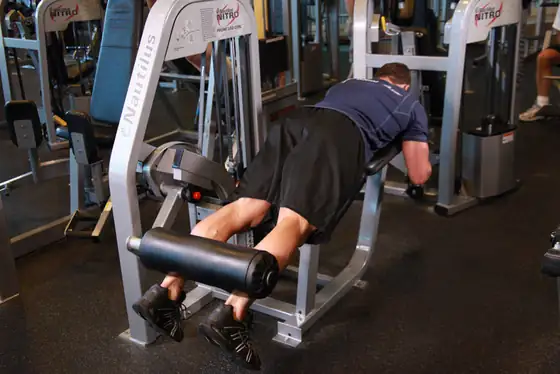
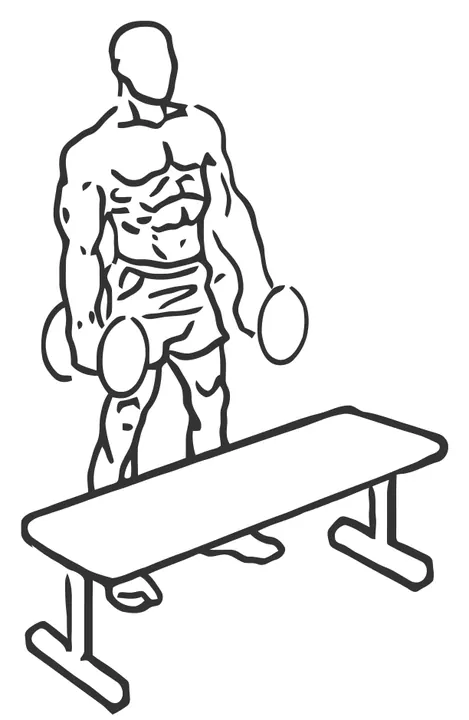
Dumbbell Step-Up
Quads, Glutes
Builds the initial contact & loading & mid-stance phase · trains Quads, Glutes, Hamstrings · single-leg / lunge pattern
100% match

Running
Thousands of single-leg landings: calves/Achilles, quads and glutes absorb 2–3× bodyweight each step while the hips must stay level. Strength work here is about economy and injury resilience.

The quads and calves absorb impact; the glute medius stops the hip from dropping.
Best exercises for this phase:
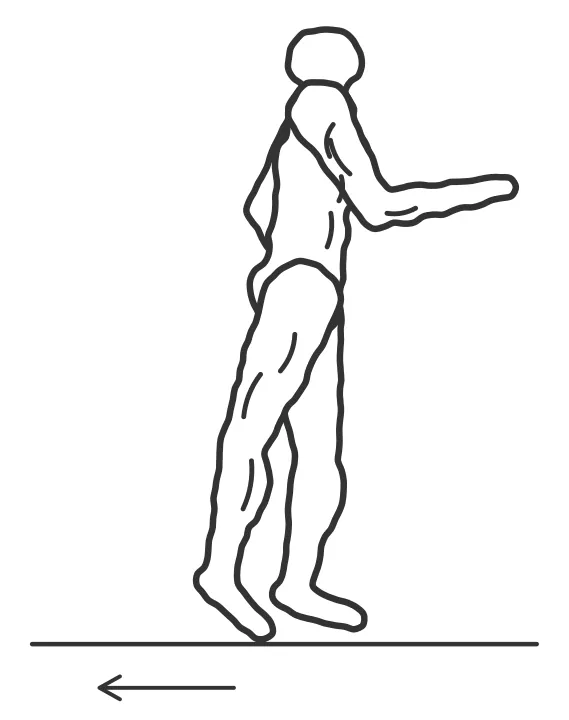
Single-leg support — hip and trunk stability.
Best exercises for this phase:
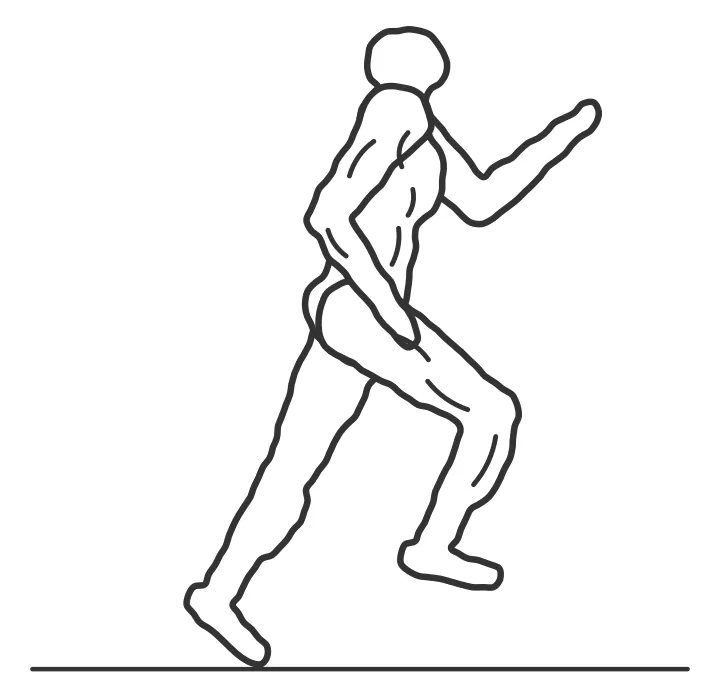
Calves (especially soleus) and glutes propel you forward.
Best exercises for this phase:
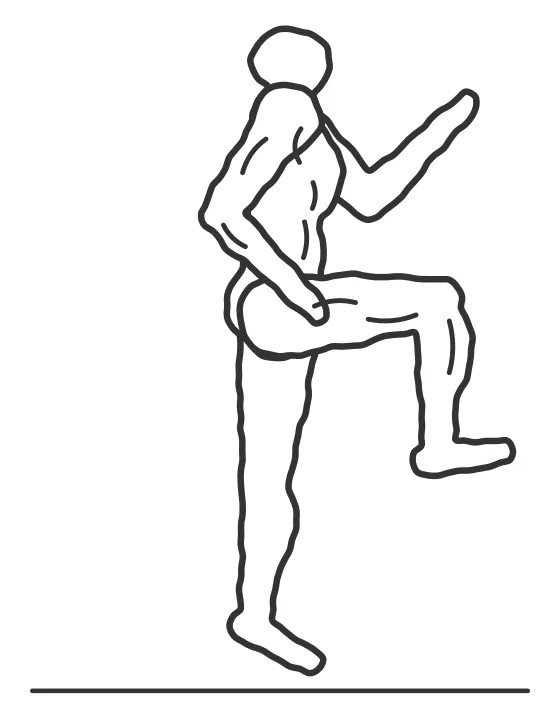
Hip flexors bring the knee through; hamstrings decelerate the lower leg.
Best exercises for this phase:
Quads, Glutes
Builds the initial contact & loading & mid-stance phase · trains Quads, Glutes, Hamstrings · single-leg / lunge pattern
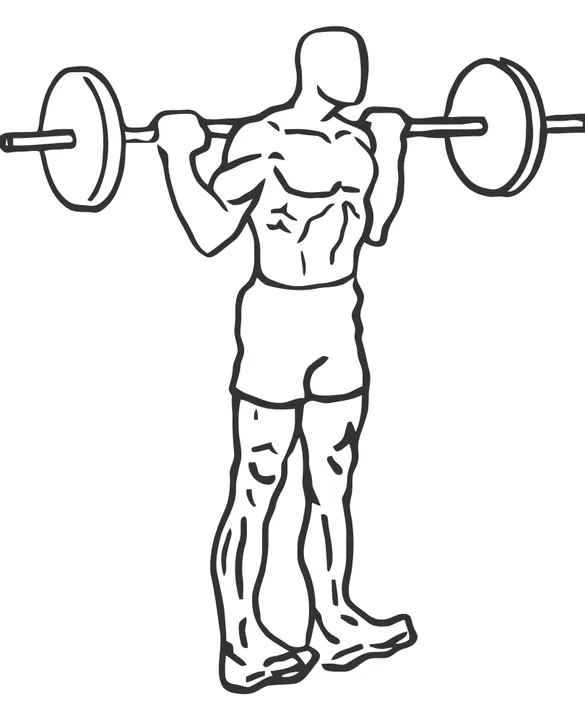
Calves
Builds the push-off phase · trains Calves · ankle push-off (plantar flexion) pattern
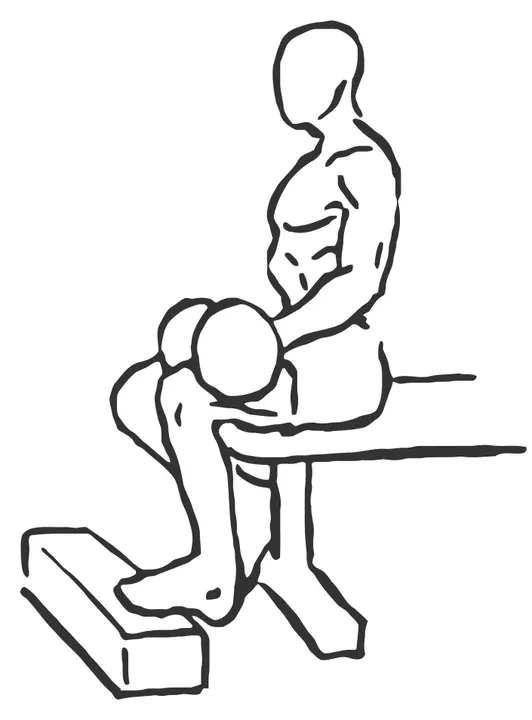
Calves
Builds the push-off phase · trains Calves · ankle push-off (plantar flexion) pattern
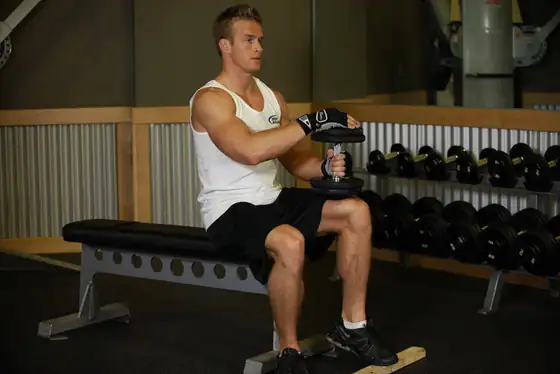
Calves
Builds the push-off phase · trains Calves · ankle push-off (plantar flexion) pattern
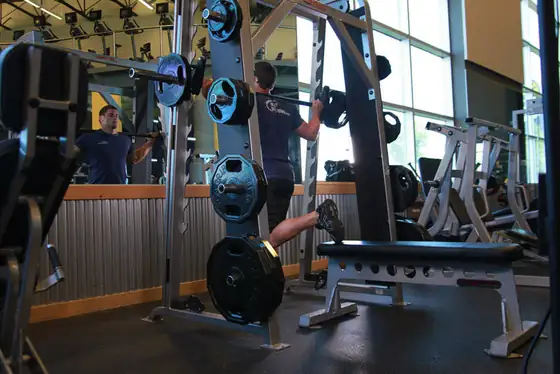
Quads
Builds the initial contact & loading phase · trains Quads, Calves, Glutes · single-leg / lunge pattern
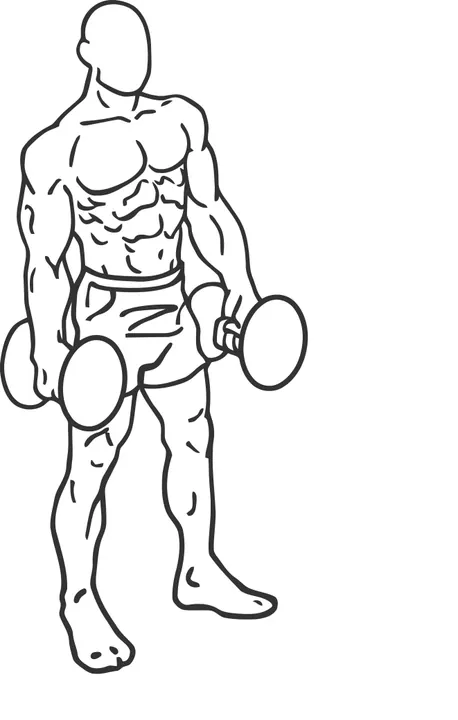
Quads, Glutes
Builds the initial contact & loading & mid-stance phase · trains Quads, Glutes, Hamstrings · single-leg / lunge pattern
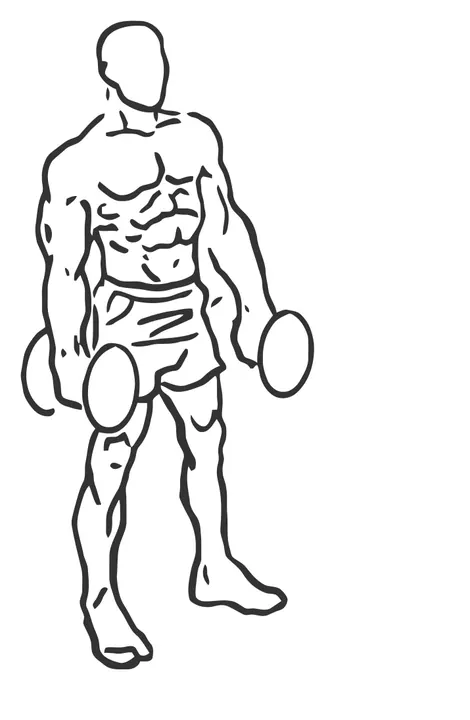
Quads, Glutes
Builds the initial contact & loading & mid-stance phase · trains Quads, Glutes, Hamstrings · single-leg / lunge pattern
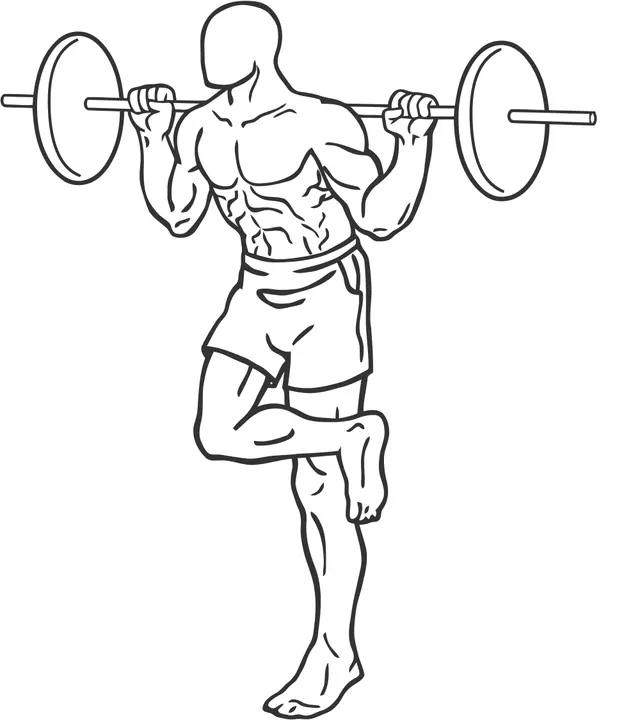
Quads, Glutes
Builds the initial contact & loading & mid-stance phase · trains Quads, Glutes, Hamstrings · single-leg / lunge pattern
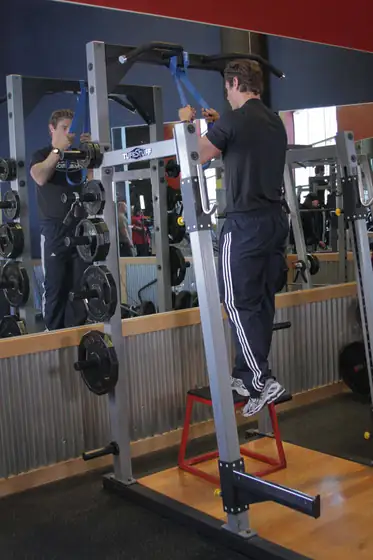
Quads
Builds the initial contact & loading phase · trains Quads, Glutes, Hamstrings · single-leg / lunge pattern
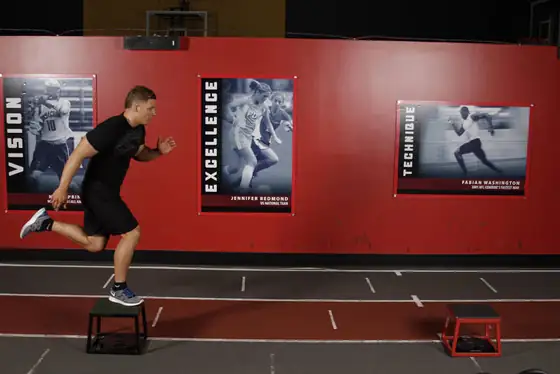
Quads
Builds the initial contact & loading phase · trains Quads, Abductors, Calves · single-leg / lunge pattern
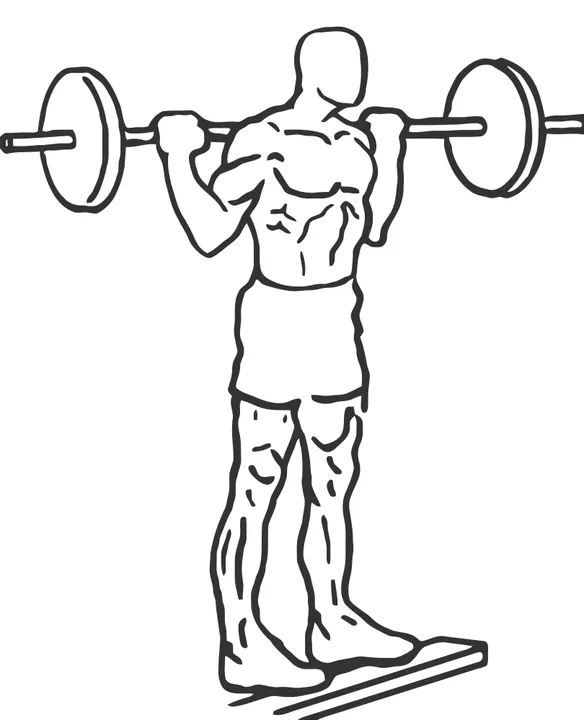
Calves
Builds the push-off phase · trains Calves · ankle push-off (plantar flexion) pattern
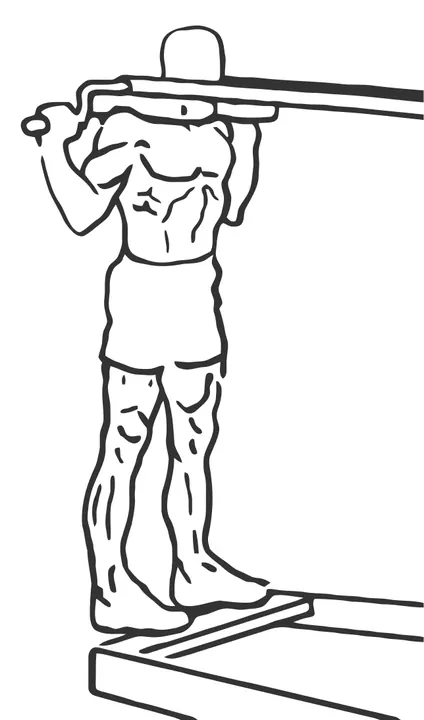
Calves
Builds the push-off phase · trains Calves · ankle push-off (plantar flexion) pattern
Work done in the water or on the run itself, next to the strength exercises above.
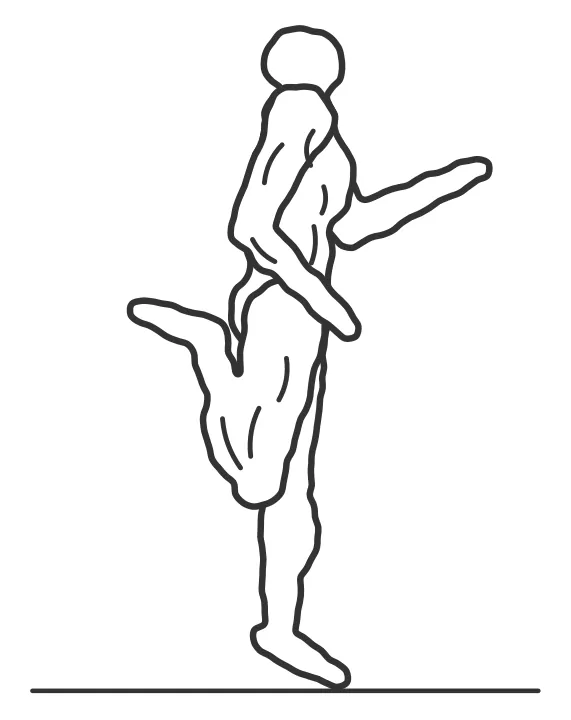
Drill / Beginner / 3 × 20 m
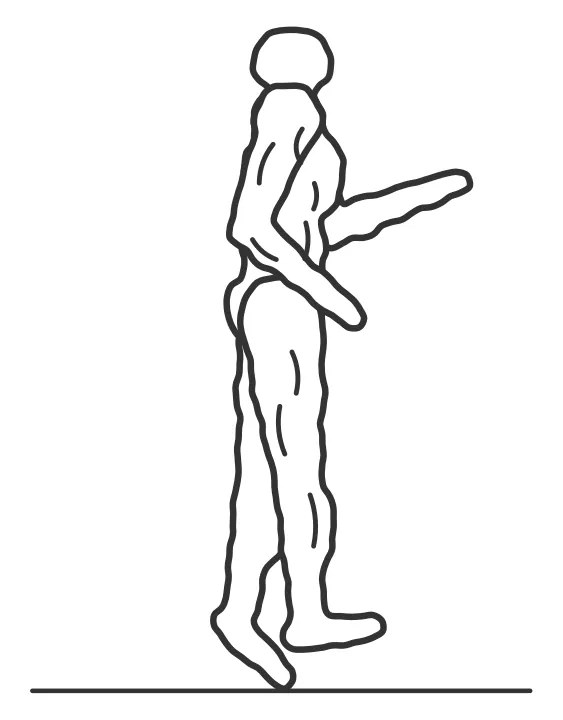
Drill / Beginner / 3 × 20 m
Session / Beginner / ≈ 40 min
Drill / Beginner / 3 × 20 m
Session / Intermediate / ≈ 50 min
Session / Intermediate / ≈ 45 min
Session / Beginner / ≈ 40 min
Session / Beginner / 60–120 min
The technique faults behind most injuries here, and how to fix them.
Why it hurts: Most running injuries (shin splints, stress fractures, Achilles tendinopathy, runner's knee) come from doing too much too soon.
✓ Instead: Raise weekly distance gradually, include an easier week every 3–4 weeks, and keep most runs easy.
Why it hurts: It creates a braking force that loads the knees and shins.
✓ Instead: Take slightly shorter, quicker steps (about 5–10% more per minute) and land with the foot under the hips.
Why it hurts: Weak hips and calves let the knees collapse and the tendons carry loads they are not ready for.
✓ Instead: Do calf raises, single-leg squats or step-ups and hip work twice a week.