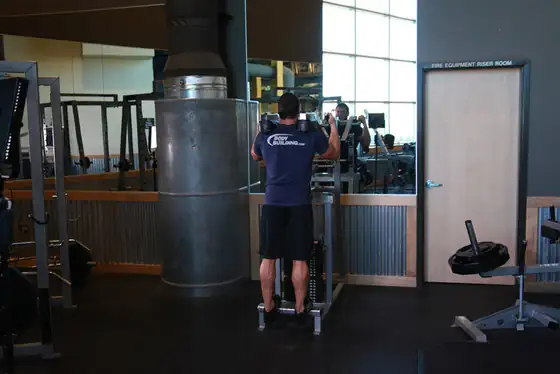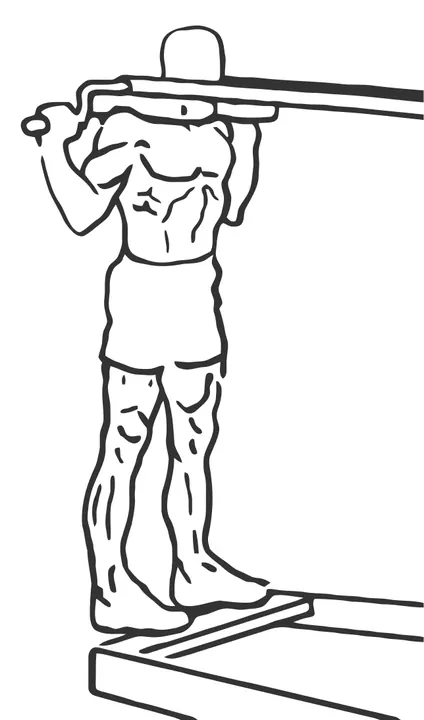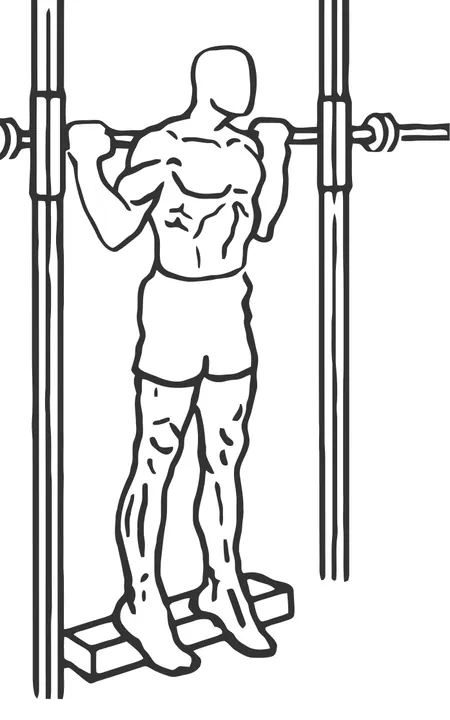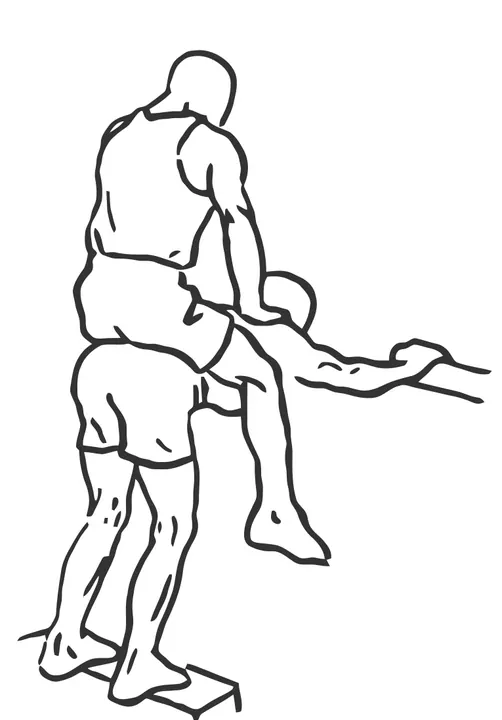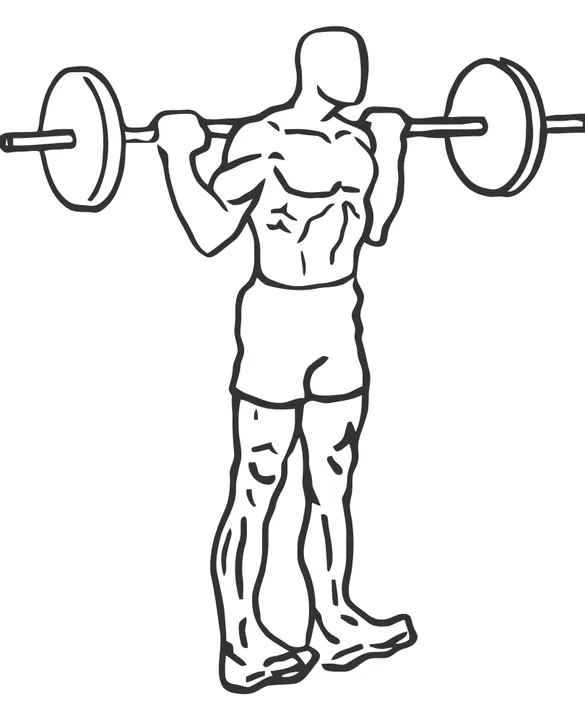
Standing Calf Raises — start position
Start
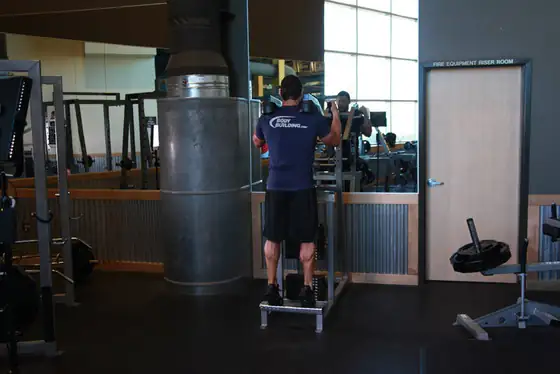
Standing Calf Raises — end position
End

Calves / Beginner / Isolation (single joint)

Standing Calf Raises

A machine isolation exercise for the calves.

At a glance

Primary
Calves
Equipment
Machines
Movement pattern
Ankle push-off (plantar flexion)
Level
Beginner
Type
Calves, Isolation (single joint)

How to do it

  1. Adjust the padded lever of the calf raise machine to fit your height.
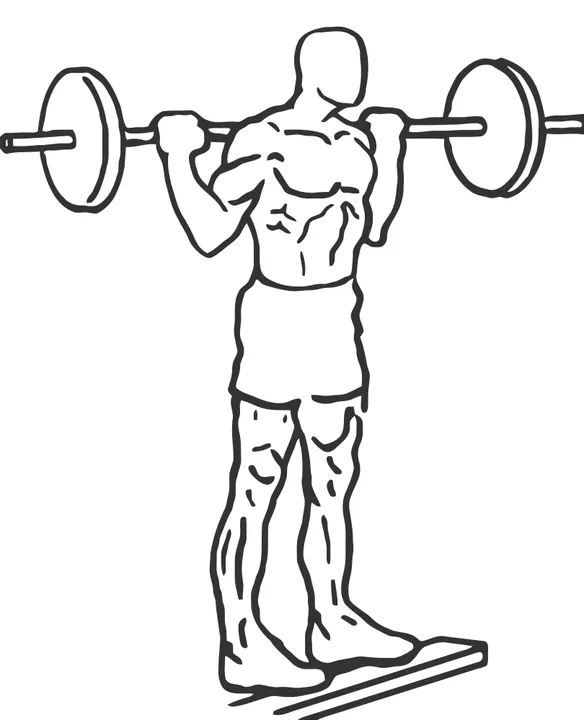
  2. Place your shoulders under the pads provided and position your toes facing forward (or using any of the two other positions described at the beginning of the chapter). The balls of your feet should be secured on top of the calf block with the heels extending off it. Push the lever up by extending your hips and knees until your torso is standing erect. The knees should be kept with a slight bend; never locked. Toes should be facing forward, outwards or inwards as described at the beginning of the chapter. This will be your starting position.
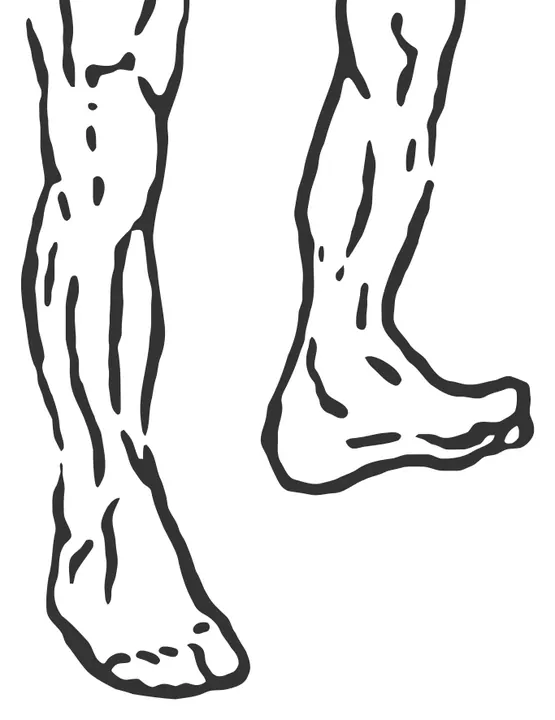
  3. Raise your heels as you breathe out by extending your ankles as high as possible and flexing your calf. Ensure that the knee is kept stationary at all times. There should be no bending at any time. Hold the contracted position by a second before you start to go back down.
  4. Go back slowly to the starting position as you breathe in by lowering your heels as you bend the ankles until calves are stretched.
  5. Repeat for the recommended amount of repetitions.

Common mistakes

  • ✗ Bouncing fast through a short range.

    Why it hurts: Runners need calves and Achilles tendons that tolerate load through full range; bouncing trains neither and can irritate the tendon.

    ✓ Instead: Go slowly: 2 seconds up, pause, 3 seconds down to a full heel stretch. Also train one leg at a time and bent-knee (seated) versions for the soleus.

  • ✗ Rolling onto the outer edge of the foot.

    Why it hurts: The ankle is loaded unevenly, which can strain the peroneal tendons.

    ✓ Instead: Push through the big and second toe so the ankle rises straight.

Open in the appGet started

Muscles worked

Neck (Front)Upper traps (Front)Front delts (Front)Side delts (Front)Chest (Front)Serratus anterior (Front)Biceps (Front)Forearms & grip (Front)Abs (Front)Obliques (Front)Hip flexors (Front)Quads (Front)Adductors (Front)Shins (tibialis) (Front)Calves — primary (Front)Outer shins (peroneals) (Front)Feet (arch & toes) (Front)Neck (Back)Upper traps (Back)Upper back (rhomboids, mid/lower traps) (Back)Rear delts (Back)Side delts (Back)Rotator cuff (Back)Lats (Back)Lower back (erectors) (Back)Triceps (Back)Forearms & grip (Back)Hip abductors (glute med) (Back)Glutes (Back)Hamstrings (Back)Adductors (Back)Calves — primary (Back)
FrontBack
  • Primary: Calves

Best for

How specific this exercise is to each movement.

Similar exercises

Photos and instructions: free-exercise-db (github.com/yuhonas/free-exercise-db), public domain.