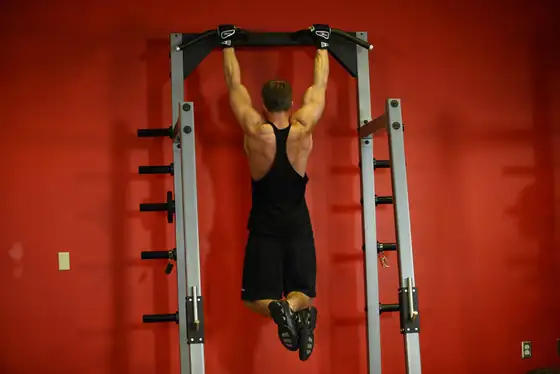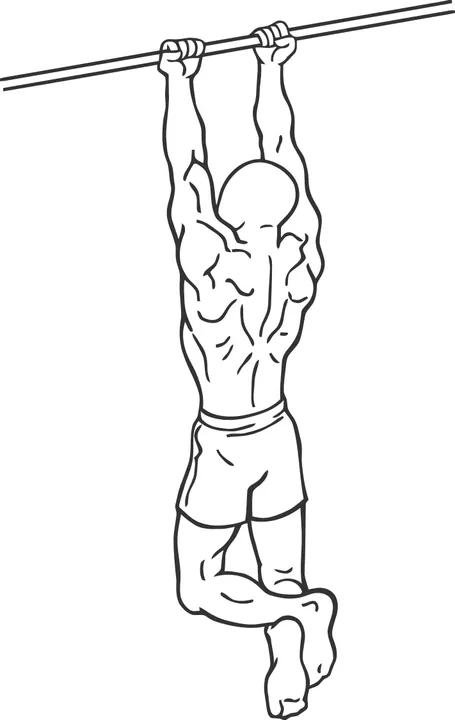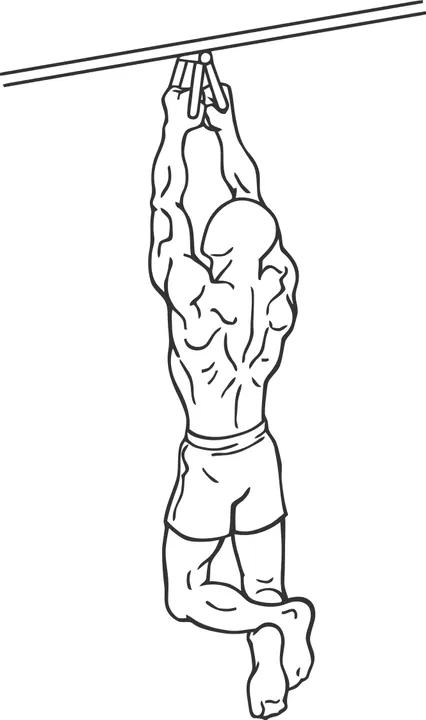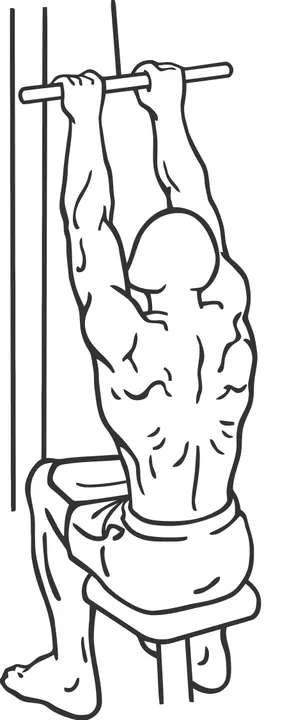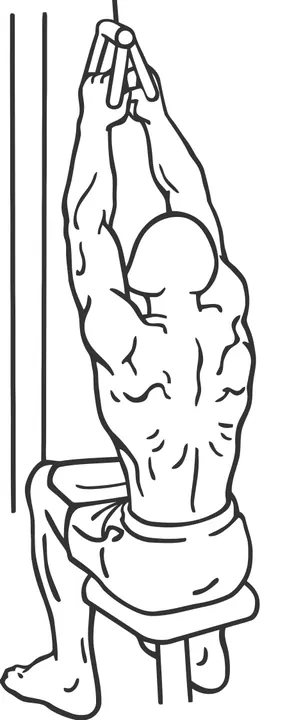
Pullups — start position
Start
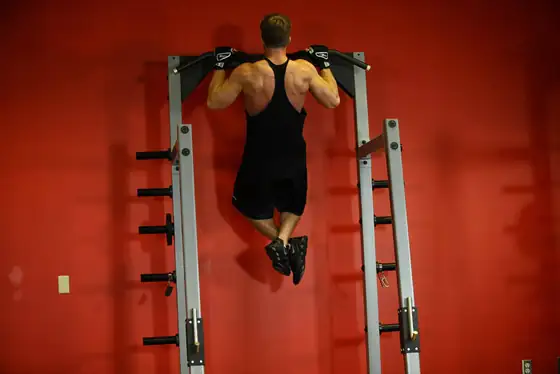
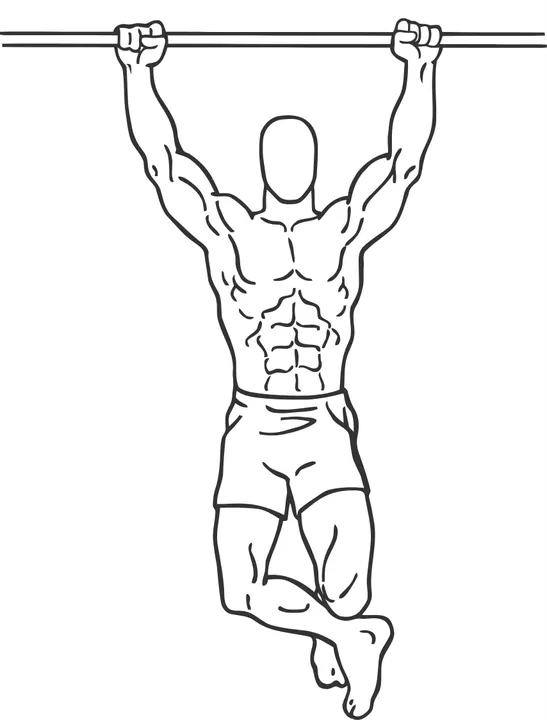
Pullups — end position
End

Back / Beginner / Compound (multi-joint)

Pullups

A bar exercise for the lats, with the biceps, upper back and forearms assisting.

At a glance

Primary
Lats
Secondary
Biceps, Upper back (rhomboids, mid/lower traps), Forearms & grip
Equipment
Pull-up bar
Movement pattern
Vertical pull, Elbow flexion (curl)
Level
Beginner
Type
Back, Compound (multi-joint)

How to do it

  1. Grab the pull-up bar with the palms facing forward using the prescribed grip. Note on grips: For a wide grip, your hands need to be spaced out at a distance wider than your shoulder width. For a medium grip, your hands need to be spaced out at a distance equal to your shoulder width and for a close grip at a distance smaller than your shoulder width.
  2. As you have both arms extended in front of you holding the bar at the chosen grip width, bring your torso back around 30 degrees or so while creating a curvature on your lower back and sticking your chest out. This is your starting position.
  3. Pull your torso up until the bar touches your upper chest by drawing the shoulders and the upper arms down and back. Exhale as you perform this portion of the movement. Tip: Concentrate on squeezing the back muscles once you reach the full contracted position. The upper torso should remain stationary as it moves through space and only the arms should move. The forearms should do no other work other than hold the bar.
  4. After a second on the contracted position, start to inhale and slowly lower your torso back to the starting position when your arms are fully extended and the lats are fully stretched.
  5. Repeat this motion for the prescribed amount of repetitions.

Common mistakes

  • ✗ Dropping into a dead hang with loose shoulders.

    Why it hurts: The body weight yanks on the shoulder capsule and the elbows at the bottom.

    ✓ Instead: Lower under control and keep light tension in the shoulders at the bottom.

  • ✗ Kipping or reaching the chin with the neck.

    Why it hurts: Momentum loads the shoulder in end range, and craning the neck strains it.

    ✓ Instead: Do strict reps: start by pulling the shoulder blades down, then bring the chest toward the bar. Use a band for assistance.

Open in the appGet started

Muscles worked

Neck (Front)Upper traps (Front)Front delts (Front)Side delts (Front)Chest (Front)Serratus anterior (Front)Biceps — secondary (Front)Forearms & grip — secondary (Front)Abs (Front)Obliques (Front)Hip flexors (Front)Quads (Front)Adductors (Front)Shins (tibialis) (Front)Calves (Front)Outer shins (peroneals) (Front)Feet (arch & toes) (Front)Neck (Back)Upper traps (Back)Upper back (rhomboids, mid/lower traps) — secondary (Back)Rear delts (Back)Side delts (Back)Rotator cuff (Back)Lats — primary (Back)Lower back (erectors) (Back)Triceps (Back)Forearms & grip — secondary (Back)Hip abductors (glute med) (Back)Glutes (Back)Hamstrings (Back)Adductors (Back)Calves (Back)
FrontBack
  • Primary: Lats
  • Secondary: Biceps, Upper back (rhomboids, mid/lower traps), Forearms & grip

Best for

How specific this exercise is to each movement.

Similar exercises

Photos and instructions: free-exercise-db (github.com/yuhonas/free-exercise-db), public domain.