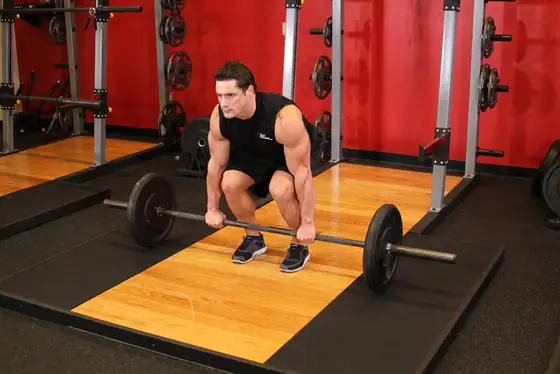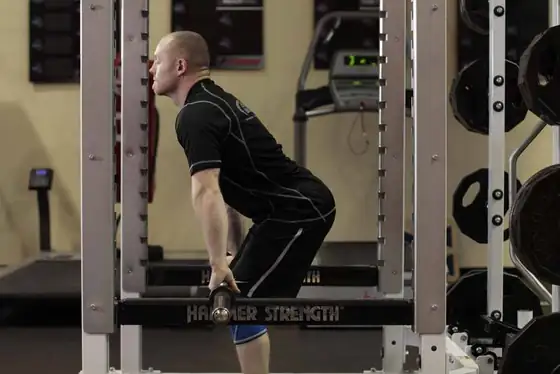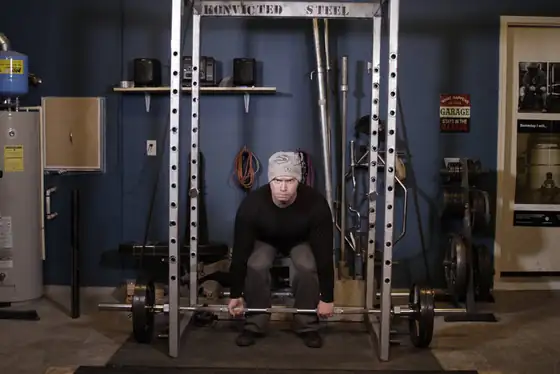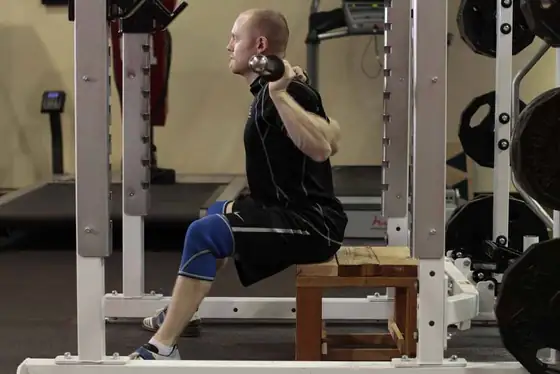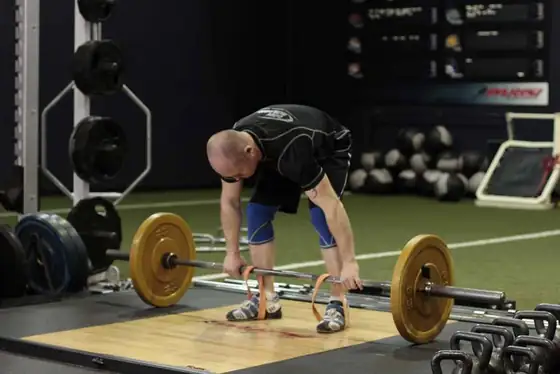
Barbell Deadlift — start position
Start
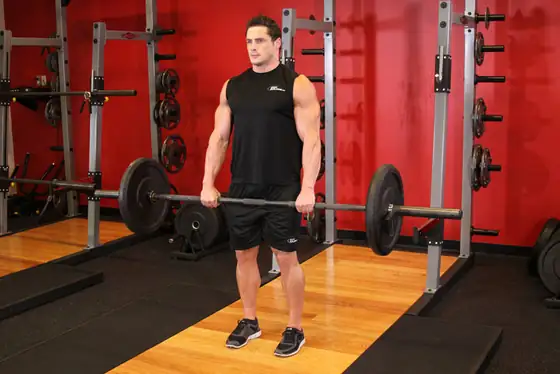
Barbell Deadlift — end position
End

Back / Intermediate / Compound (multi-joint)

Barbell Deadlift

A barbell exercise for the lower back, with the calves, forearms and glutes assisting.

At a glance

Primary
Lower back (erectors)
Secondary
Calves, Forearms & grip, Glutes, Hamstrings, Lats, Upper back (rhomboids, mid/lower traps), Quads, Upper traps
Equipment
Barbell
Movement pattern
Hip hinge
Level
Intermediate
Type
Back, Compound (multi-joint)

Loads the lower back. Use a load you can control and skip it if it causes pain.

How to do it

  1. Stand in front of a loaded barbell.
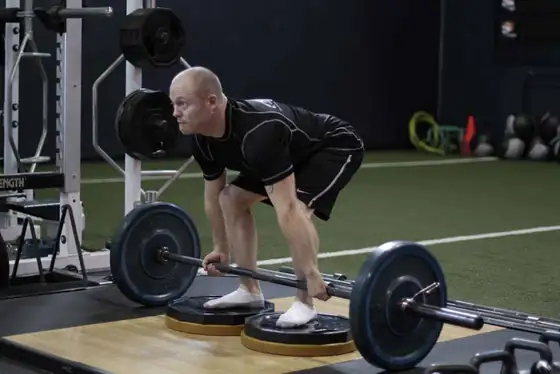
  2. While keeping the back as straight as possible, bend your knees, bend forward and grasp the bar using a medium (shoulder width) overhand grip. This will be the starting position of the exercise. Tip: If it is difficult to hold on to the bar with this grip, alternate your grip or use wrist straps.
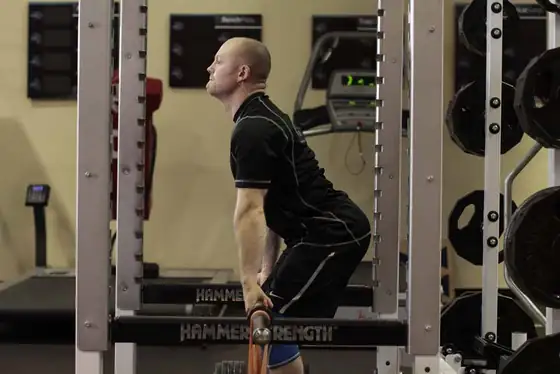
  3. While holding the bar, start the lift by pushing with your legs while simultaneously getting your torso to the upright position as you breathe out. In the upright position, stick your chest out and contract the back by bringing the shoulder blades back. Think of how the soldiers in the military look when they are in standing in attention.
  4. Go back to the starting position by bending at the knees while simultaneously leaning the torso forward at the waist while keeping the back straight. When the weights on the bar touch the floor you are back at the starting position and ready to perform another repetition.
  5. Perform the amount of repetitions prescribed in the program.

Common mistakes

  • ✗ Rounding the lower back off the floor.

    Why it hurts: A flexed spine under a heavy bar is the classic mechanism for lower-back strains and disc injuries.

    ✓ Instead: Take a big breath, brace, pull the slack out of the bar and push the floor away with a neutral spine. Reduce the weight if the back rounds.

  • ✗ Bar drifts away from the body.

    Why it hurts: Every centimetre the bar moves away lengthens the lever on the lower back.

    ✓ Instead: Start with the bar over mid-foot and drag it up the shins and thighs. Engage the lats as if bending the bar around your legs.

  • ✗ Hyper-extending the back at lockout.

    Why it hurts: Leaning back pinches the facet joints of the lumbar spine.

    ✓ Instead: Finish by squeezing the glutes and standing tall. Hips under shoulders is the end position.

Open in the appGet started

Muscles worked

Neck (Front)Upper traps — secondary (Front)Front delts (Front)Side delts (Front)Chest (Front)Serratus anterior (Front)Biceps (Front)Forearms & grip — secondary (Front)Abs (Front)Obliques (Front)Hip flexors (Front)Quads — secondary (Front)Adductors (Front)Shins (tibialis) (Front)Calves — secondary (Front)Outer shins (peroneals) (Front)Feet (arch & toes) (Front)Neck (Back)Upper traps — secondary (Back)Upper back (rhomboids, mid/lower traps) — secondary (Back)Rear delts (Back)Side delts (Back)Rotator cuff (Back)Lats — secondary (Back)Lower back (erectors) — primary (Back)Triceps (Back)Forearms & grip — secondary (Back)Hip abductors (glute med) (Back)Glutes — secondary (Back)Hamstrings — secondary (Back)Adductors (Back)Calves — secondary (Back)
FrontBack
  • Primary: Lower back (erectors)
  • Secondary: Calves, Forearms & grip, Glutes, Hamstrings, Lats, Upper back (rhomboids, mid/lower traps), Quads, Upper traps

Best for

How specific this exercise is to each movement.

Similar exercises

Photos and instructions: free-exercise-db (github.com/yuhonas/free-exercise-db), public domain.