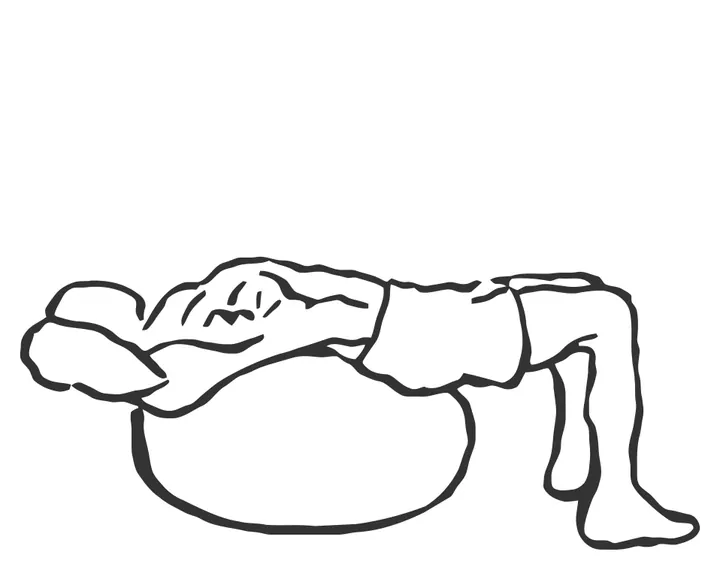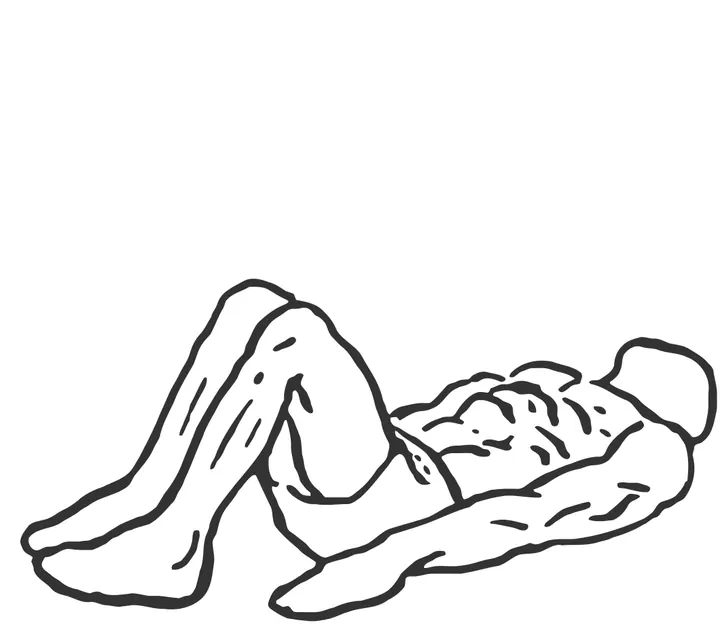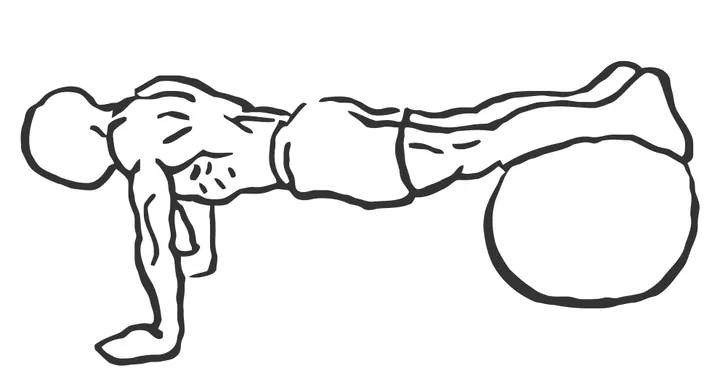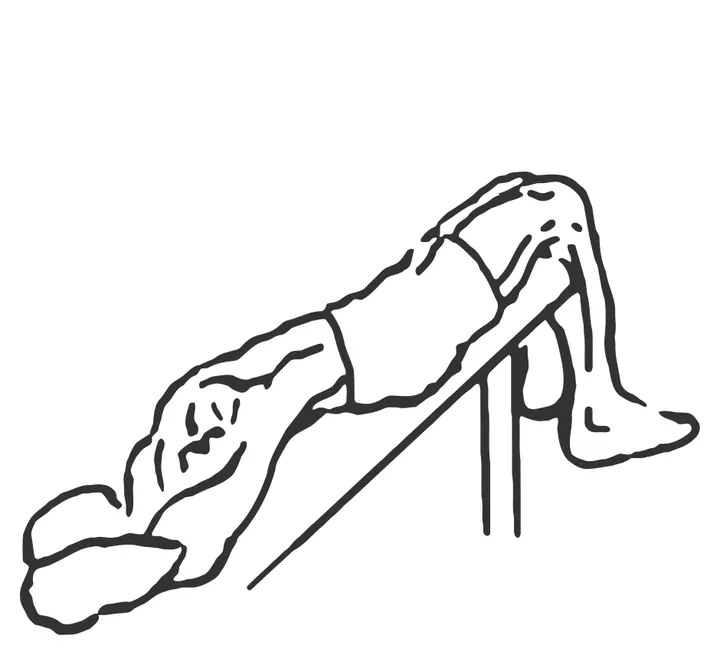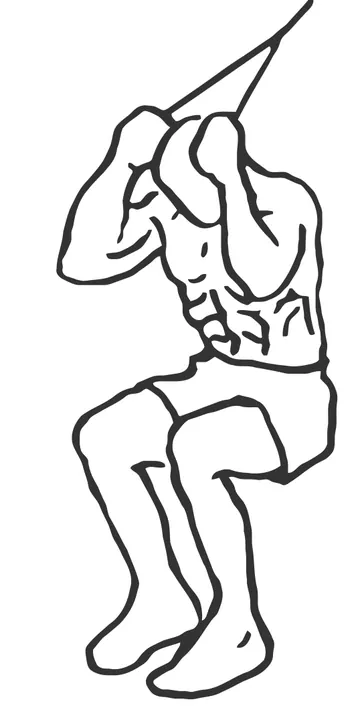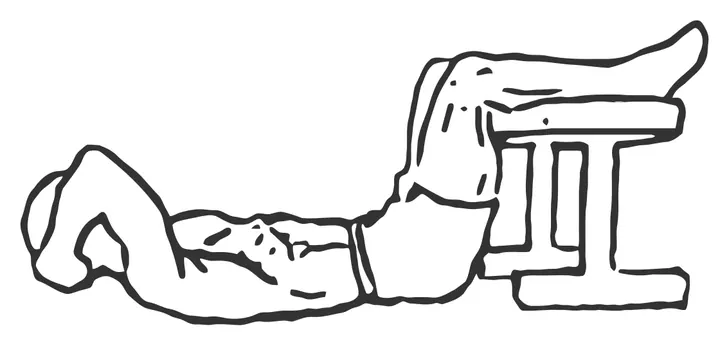
Stability Ball Crunch — start position
Start
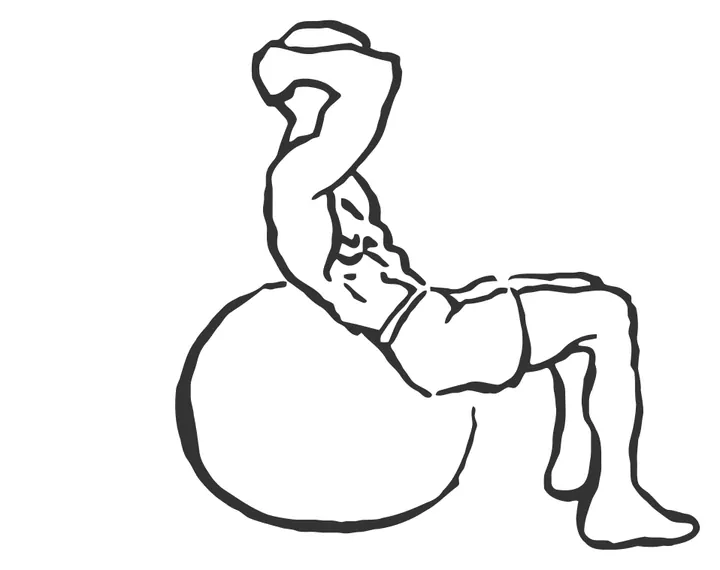
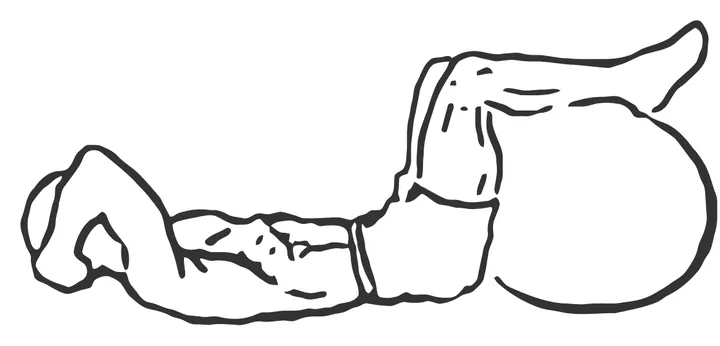
Stability Ball Crunch — end position
End

Core / Beginner / Isolation (single joint)

Stability Ball Crunch

A crunch performed lying back on a stability ball, which allows a longer range of motion for the abs.

At a glance

Primary
Abs
Secondary
Obliques
Equipment
Stability ball
Movement pattern
Trunk flexion
Level
Beginner
Type
Core, Isolation (single joint), Balance / unstable

How to do it

  1. Sit on a stability ball and walk your feet forward until your lower back is centered on the ball.
  2. Lie back and place your hands across your chest or beside your head.
  3. Crunch your head, shoulders and chest up by contracting your abs.
  4. Pause, then lower back over the ball under control.

Tips

  • Keep your feet planted for balance.
  • Do not yank the neck.

Common mistakes

  • ✗ Pulling on the head with the hands.

    Why it hurts: The neck flexes hard under the arm pull and gets strained.

    ✓ Instead: Touch the fingertips lightly behind the ears or cross the arms on the chest and look at the ceiling.

  • ✗ Doing hundreds of fast reps.

    Why it hurts: Repeated fast spinal flexion can irritate the discs, especially for people with a history of back pain.

    ✓ Instead: Do fewer, slower reps and mix in anti-movement core work such as planks and dead bugs.

Open in the appGet started

Muscles worked

Neck (Front)Upper traps (Front)Front delts (Front)Side delts (Front)Chest (Front)Serratus anterior (Front)Biceps (Front)Forearms & grip (Front)Abs — primary (Front)Obliques — secondary (Front)Hip flexors (Front)Quads (Front)Adductors (Front)Shins (tibialis) (Front)Calves (Front)Outer shins (peroneals) (Front)Feet (arch & toes) (Front)Neck (Back)Upper traps (Back)Upper back (rhomboids, mid/lower traps) (Back)Rear delts (Back)Side delts (Back)Rotator cuff (Back)Lats (Back)Lower back (erectors) (Back)Triceps (Back)Forearms & grip (Back)Hip abductors (glute med) (Back)Glutes (Back)Hamstrings (Back)Adductors (Back)Calves (Back)
FrontBack
  • Primary: Abs
  • Secondary: Obliques

Best for

How specific this exercise is to each movement.

Similar exercises

Illustration: Everkinetic (everkinetic.com), CC BY-SA 4.0.