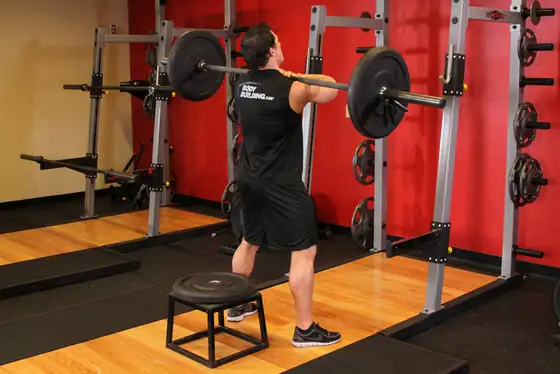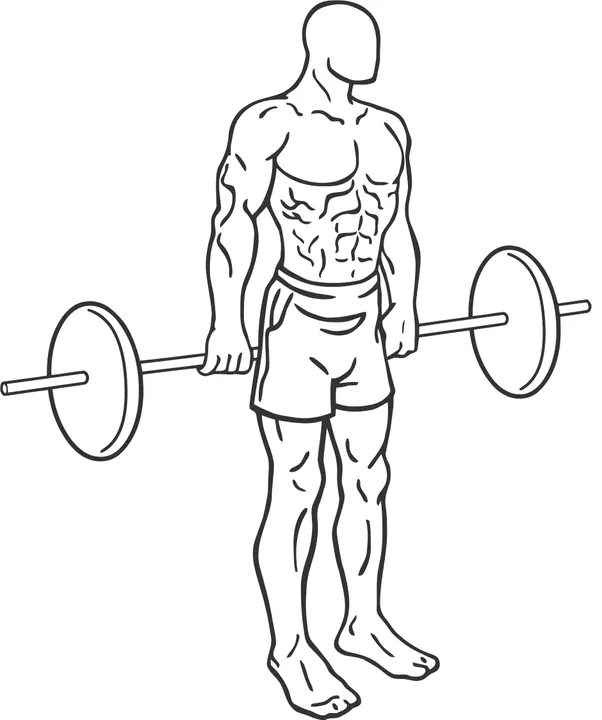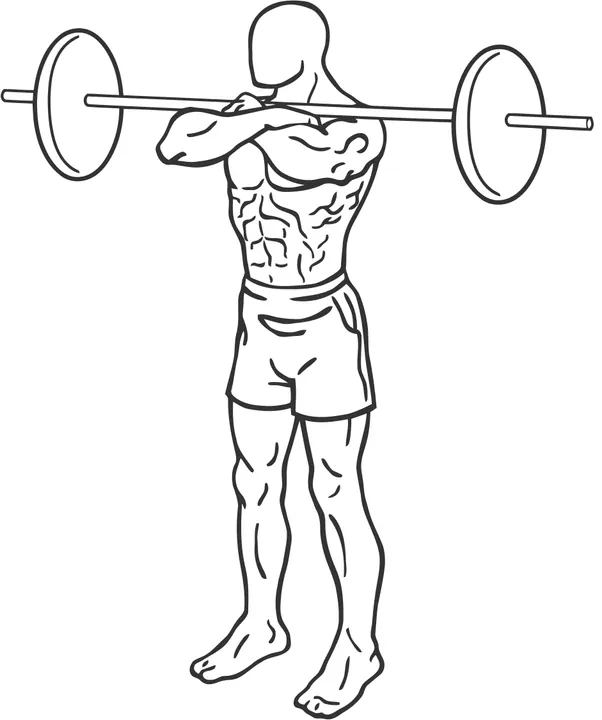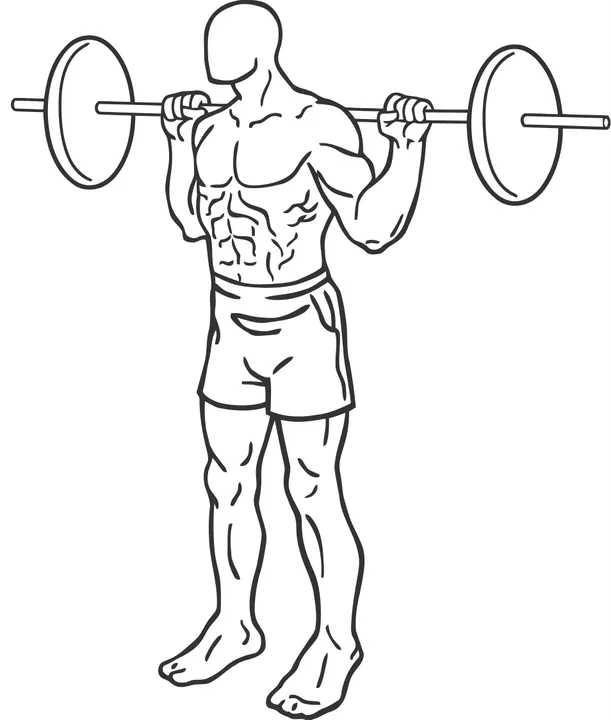
Front Barbell Squat To A Bench — start position
Start
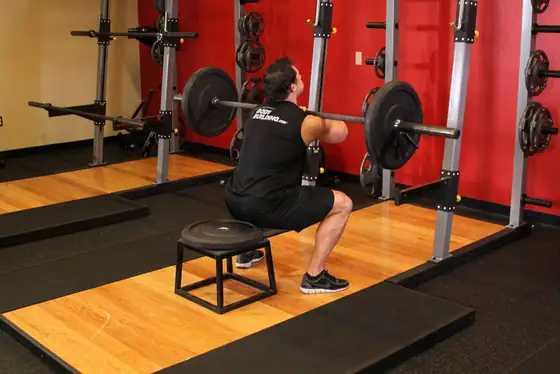
Front Barbell Squat To A Bench — end position
End

Legs / Advanced / Compound (multi-joint)

Front Barbell Squat To A Bench

A barbell exercise for the quads, with the calves, glutes and hamstrings assisting.

At a glance

Primary
Quads
Secondary
Calves, Glutes, Hamstrings
Equipment
Barbell, Bench
Movement pattern
Squat
Level
Advanced
Type
Legs, Compound (multi-joint)

How to do it

  1. This exercise is best performed inside a squat rack for safety purposes. To begin, first set a flat bench behind you and set the bar on a rack that best matches your height. Once the correct height is chosen and the bar is loaded, bring your arms up under the bar while keeping the elbows high and the upper arm slightly above parallel to the floor. Rest the bar on top of the deltoids and cross your arms while grasping the bar for total control.
  2. Lift the bar off the rack by first pushing with your legs and at the same time straightening your torso.
  3. Step away from the rack and position your legs using a shoulder width medium stance with the toes slightly pointed out. Keep your head up at all times as looking down will get you off balance and also maintain a straight back. This will be your starting position. (Note: For the purposes of this discussion we will use the medium stance described above which targets overall development; however you can choose any of the three stances described in the foot positioning section).
  4. Begin to slowly lower the bar by bending the knees as you maintain a straight posture with the head up. Continue down until you touch the bench with your glutes. Inhale as you perform this portion of the movement. Tip: If you performed the exercise correctly, the front of the knees should make an imaginary straight line with the toes that is perpendicular to the front. If your knees are past that imaginary line (if they are past your toes) then you are placing undue stress on the knee and the exercise has been performed incorrectly.
  5. Begin to raise the bar as you exhale by pushing the floor mainly with the heel of your foot as you straighten the legs again and go back to the starting position.
  6. Repeat for the recommended amount of repetitions.

Common mistakes

  • ✗ Elbows drop and the upper back rounds forward.

    Why it hurts: The bar rolls forward onto the wrists and the thoracic spine flexes under load, straining the wrists and upper back.

    ✓ Instead: Drive the elbows up so the upper arms are close to parallel with the floor. Use a cross-arm or strap grip if wrist mobility is limited.

  • ✗ Holding the bar in the hands with bent wrists.

    Why it hurts: The weight hangs on hyper-extended wrists and can cause wrist sprain or pain.

    ✓ Instead: Let the bar sit on the front delts against the throat; the fingers only steady it.

Open in the appGet started

Muscles worked

Neck (Front)Upper traps (Front)Front delts (Front)Side delts (Front)Chest (Front)Serratus anterior (Front)Biceps (Front)Forearms & grip (Front)Abs (Front)Obliques (Front)Hip flexors (Front)Quads — primary (Front)Adductors (Front)Shins (tibialis) (Front)Calves — secondary (Front)Outer shins (peroneals) (Front)Feet (arch & toes) (Front)Neck (Back)Upper traps (Back)Upper back (rhomboids, mid/lower traps) (Back)Rear delts (Back)Side delts (Back)Rotator cuff (Back)Lats (Back)Lower back (erectors) (Back)Triceps (Back)Forearms & grip (Back)Hip abductors (glute med) (Back)Glutes — secondary (Back)Hamstrings — secondary (Back)Adductors (Back)Calves — secondary (Back)
FrontBack
  • Primary: Quads
  • Secondary: Calves, Glutes, Hamstrings

Best for

How specific this exercise is to each movement.

Similar exercises

Photos and instructions: free-exercise-db (github.com/yuhonas/free-exercise-db), public domain.