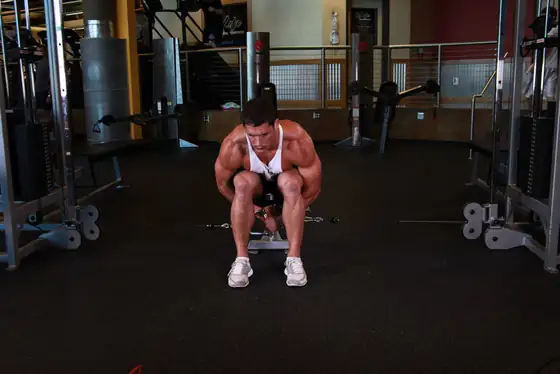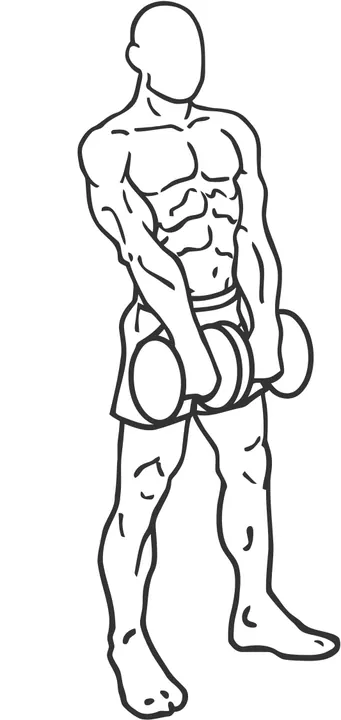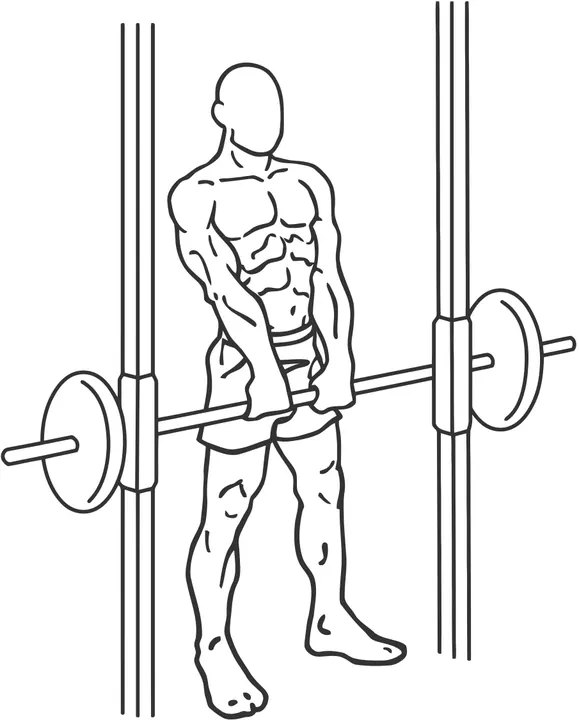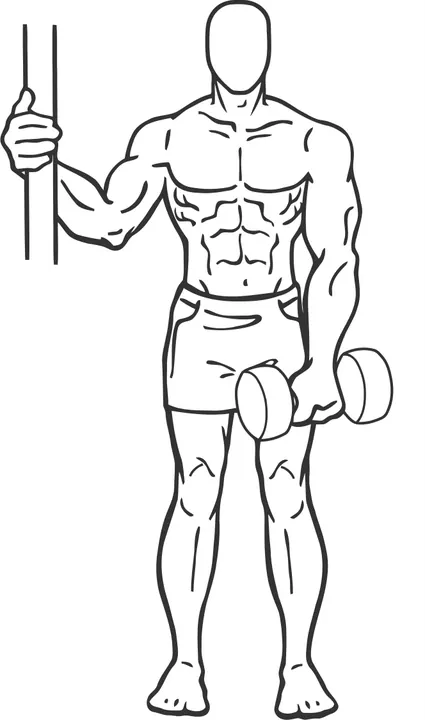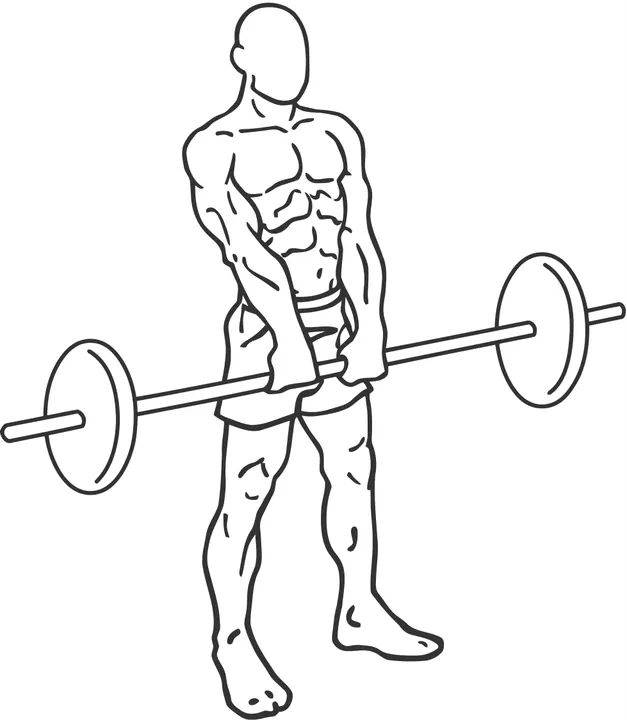
Cable Seated Lateral Raise — start position
Start
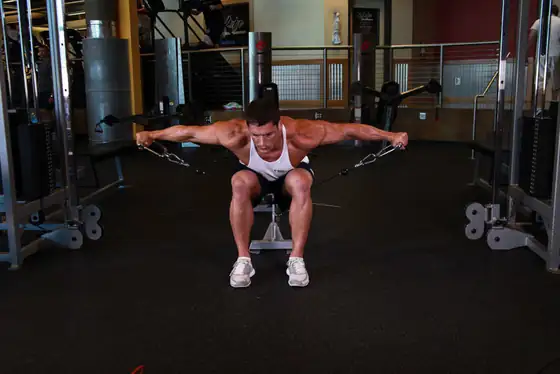
Cable Seated Lateral Raise — end position
End

Shoulders / Beginner / Isolation (single joint)

Cable Seated Lateral Raise

A cable isolation exercise for the side delts, with the upper back and upper traps assisting.

At a glance

Primary
Side delts
Secondary
Upper back (rhomboids, mid/lower traps), Upper traps
Equipment
Cable station
Movement pattern
Lateral raise (abduction)
Level
Beginner
Type
Shoulders, Isolation (single joint)

How to do it

  1. Stand in the middle of two low pulleys that are opposite to each other and place a flat bench right behind you (in perpendicular fashion to you; the narrow edge of the bench should be the one behind you). Select the weight to be used on each pulley.
  2. Now sit at the edge of the flat bench behind you with your feet placed in front of your knees.
  3. Bend forward while keeping your back flat and rest your torso on the thighs.
  4. Have someone give you the single handles attached to the pulleys. Grasp the left pulley with the right hand and the right pulley with the left after you select your weight. The pulleys should run under your knees and your arms will be extended with palms facing each other and a slight bend at the elbows. This will be the starting position.
  5. While keeping the arms stationary, raise the upper arms to the sides until they are parallel to the floor and at shoulder height. Exhale during the execution of this movement and hold the contraction for a second.
  6. Slowly lower your arms to the starting position as you inhale.
  7. Repeat for the recommended amount of repetitions. Tip: Maintain upper arms perpendicular to torso and a fixed elbow position (10 degree to 30 degree angle) throughout exercise.

Common mistakes

  • ✗ Swinging heavy dumbbells above shoulder height.

    Why it hurts: Momentum and high arm angles pinch the rotator cuff tendons (impingement).

    ✓ Instead: Use light weights, raise to shoulder height and lead with the elbows.

  • ✗ Thumbs turned down ("pouring the jug").

    Why it hurts: Internal rotation with the arm raised narrows the space the rotator cuff tendons run through.

    ✓ Instead: Keep the palms facing down or the thumbs slightly up, and raise the arms a little in front of the body.

Open in the appGet started

Muscles worked

Neck (Front)Upper traps — secondary (Front)Front delts (Front)Side delts — primary (Front)Chest (Front)Serratus anterior (Front)Biceps (Front)Forearms & grip (Front)Abs (Front)Obliques (Front)Hip flexors (Front)Quads (Front)Adductors (Front)Shins (tibialis) (Front)Calves (Front)Outer shins (peroneals) (Front)Feet (arch & toes) (Front)Neck (Back)Upper traps — secondary (Back)Upper back (rhomboids, mid/lower traps) — secondary (Back)Rear delts (Back)Side delts — primary (Back)Rotator cuff (Back)Lats (Back)Lower back (erectors) (Back)Triceps (Back)Forearms & grip (Back)Hip abductors (glute med) (Back)Glutes (Back)Hamstrings (Back)Adductors (Back)Calves (Back)
FrontBack
  • Primary: Side delts
  • Secondary: Upper back (rhomboids, mid/lower traps), Upper traps

Best for

How specific this exercise is to each movement.

Similar exercises

Photos and instructions: free-exercise-db (github.com/yuhonas/free-exercise-db), public domain.