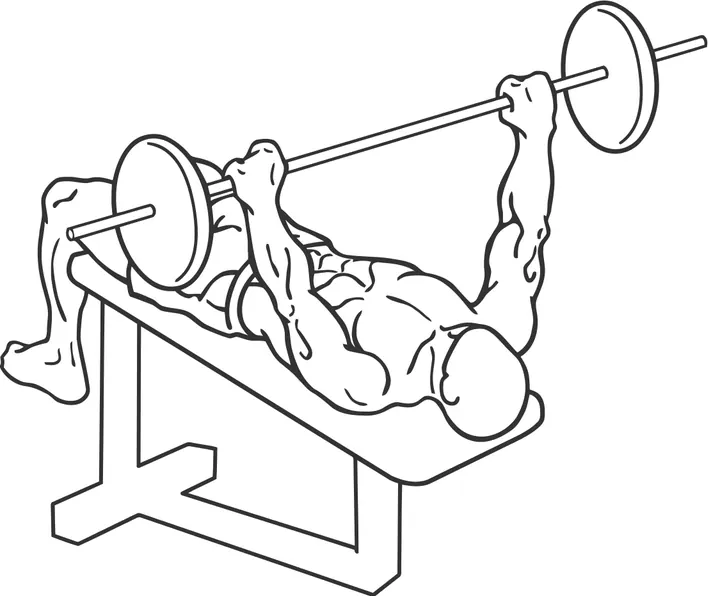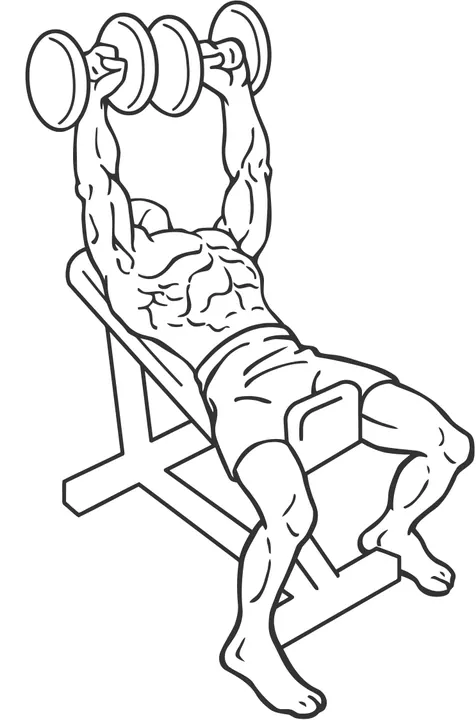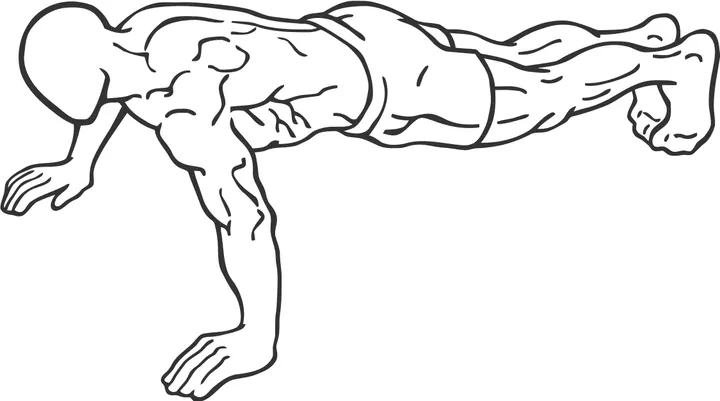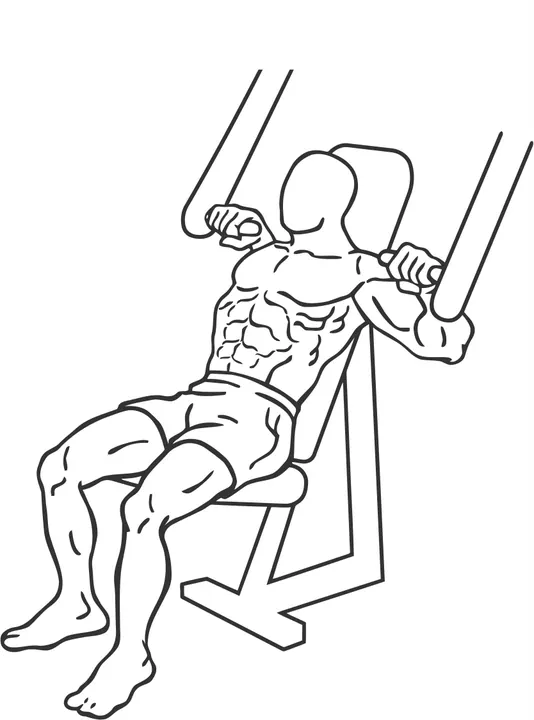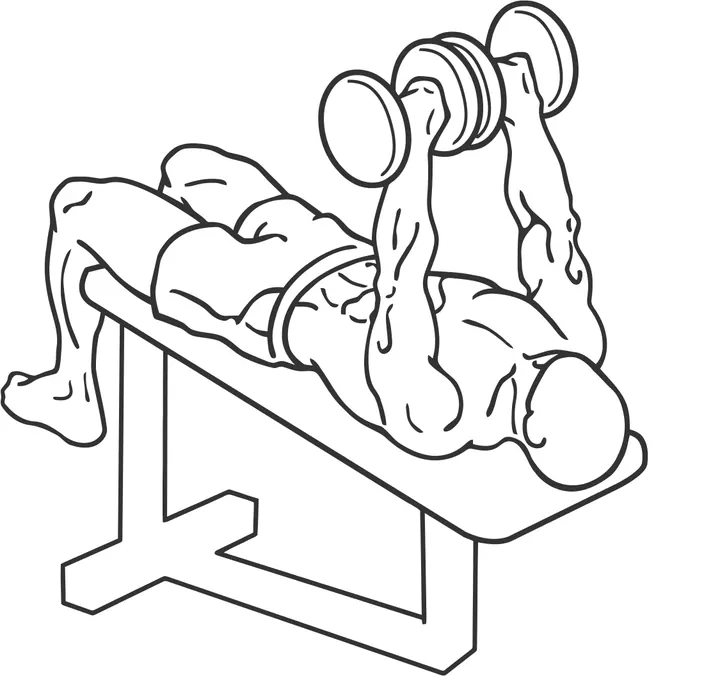
Decline Barbell Bench Press — start position
Start
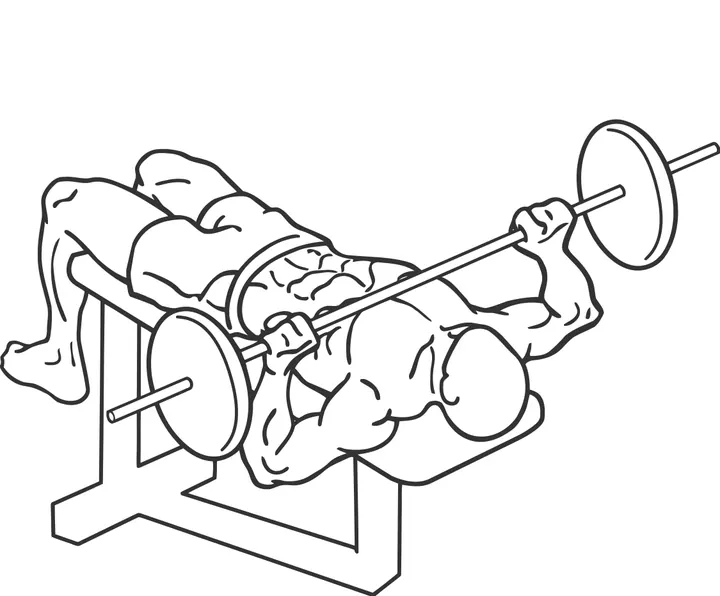
Decline Barbell Bench Press — end position
End

Chest / Intermediate / Compound (multi-joint)

Decline Barbell Bench Press

A barbell press on a decline bench that emphasizes the lower chest.

At a glance

Primary
Chest
Secondary
Triceps, Front delts
Equipment
Barbell, Bench
Movement pattern
Horizontal push
Level
Intermediate
Type
Chest, Compound (multi-joint)

Loads the shoulder. Use a load you can control and skip it if it causes pain.

How to do it

  1. Lie on a decline bench with your legs secured and head lower than your feet.
  2. Grip the bar slightly wider than shoulder width, unrack it and hold it over your lower chest with arms straight.
  3. Lower the bar to your lower chest.
  4. Press it back up to full extension.

Tips

  • Use a spotter.
  • Keep the shoulder blades retracted.

Common mistakes

  • ✗ Legs not locked in under the pads.

    Why it hurts: You can slide down the bench with the bar overhead.

    ✓ Instead: Hook the legs securely before unracking and use a spotter.

  • ✗ Lowering the bar to the neck or upper chest.

    Why it hurts: The shoulders flare and a slip can land the bar on the throat.

    ✓ Instead: Lower to the lower chest with the elbows tucked.

Open in the appGet started

Muscles worked

Neck (Front)Upper traps (Front)Front delts — secondary (Front)Side delts (Front)Chest — primary (Front)Serratus anterior (Front)Biceps (Front)Forearms & grip (Front)Abs (Front)Obliques (Front)Hip flexors (Front)Quads (Front)Adductors (Front)Shins (tibialis) (Front)Calves (Front)Outer shins (peroneals) (Front)Feet (arch & toes) (Front)Neck (Back)Upper traps (Back)Upper back (rhomboids, mid/lower traps) (Back)Rear delts (Back)Side delts (Back)Rotator cuff (Back)Lats (Back)Lower back (erectors) (Back)Triceps — secondary (Back)Forearms & grip (Back)Hip abductors (glute med) (Back)Glutes (Back)Hamstrings (Back)Adductors (Back)Calves (Back)
FrontBack
  • Primary: Chest
  • Secondary: Triceps, Front delts

Best for

How specific this exercise is to each movement.

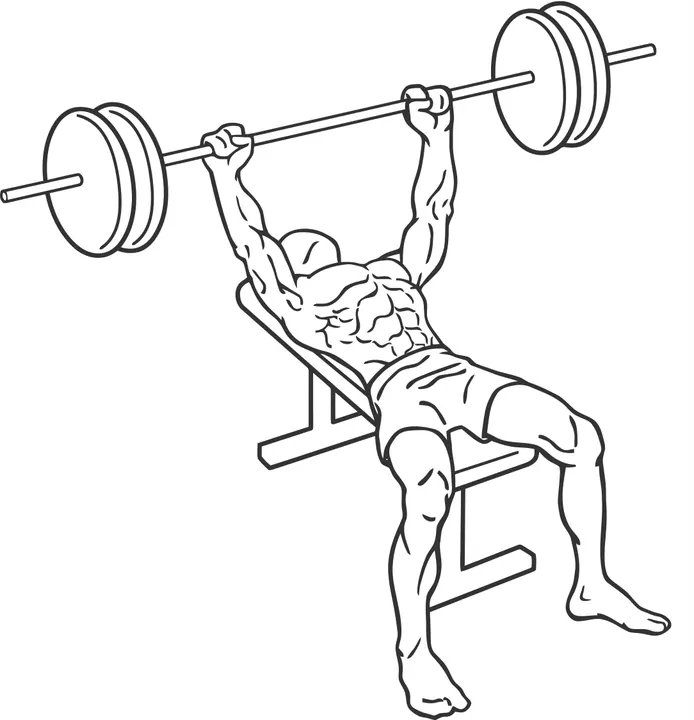
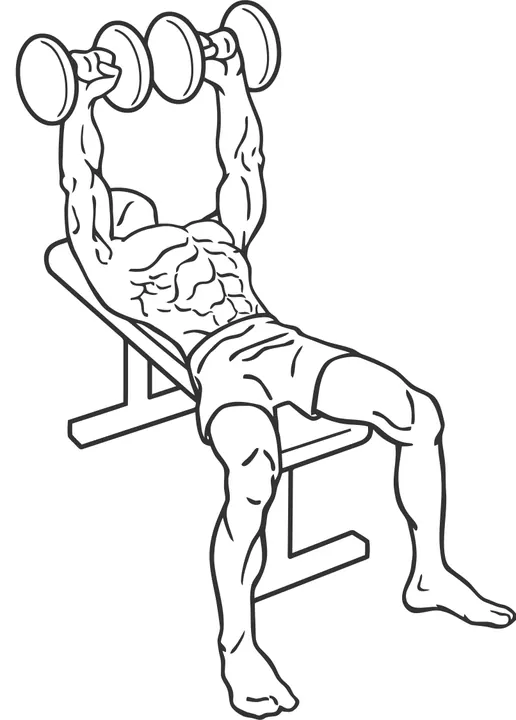
Similar exercises

Illustration: Everkinetic (everkinetic.com), CC BY-SA 4.0.