Freestyle Strength Training Exercises and Weekly Plan
If you swim freestyle several times a week, your gym work should build endurance for repeated shoulder extension, pulling, trunk control and shoulder-blade control. Freestyle calls mainly for endurance, so land-based copies of the stroke have little to add. The gym should support the demands of the stroke by training its underlying patterns on land.
When the energy goes, stop the set unless you have to finish it. That is the moment compensation starts and the shoulders take the load. Keep this rule close through the session, because fatigue changes how the shoulder is held and how the movement is performed.
For a short session, use these four matches:
- Rope Straight-Arm Pulldown for the pull and push
- Pallof Press With Rotation for the body roll
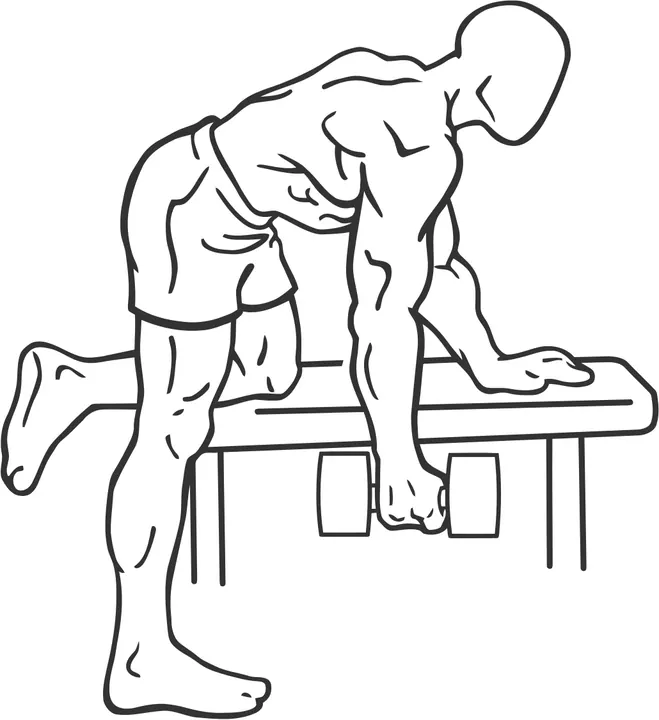
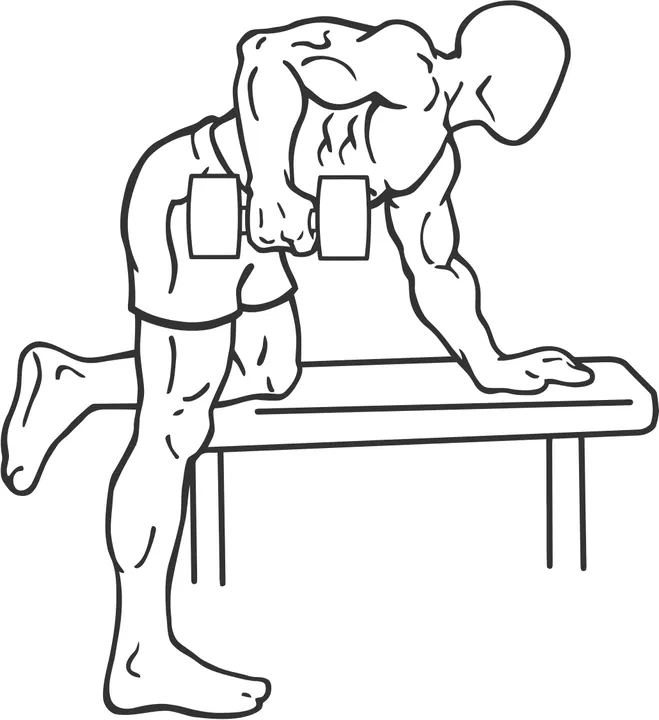
- Reverse Flyes With External Rotation for recovery
- Stability Ball Dumbbell Pullover for entry, extension and catch, as well as the pull and push
Freestyle Demands
The entry, extension and catch asks the rotator cuff, front delts, serratus anterior and lats to place the hand forward and establish the catch, while the pull and push uses the lats, chest, triceps and forearms to take the arm under the body and past the hip.
The body roll links the pull to the kick through the obliques, abs and lower back, recovery uses the rear and side delts, upper back and rotator cuff as the shoulder blade glides, and the flutter kick starts at the hip through the hip flexors, glutes, quads and hamstrings.
Among the joint actions the app weights for freestyle, straight-arm pull and vertical pull come first, then shoulder rotation, trunk rotation, anti-rotation and elbow extension.
Exercise Matches
These picks cover the phases with the clearest exercise matches in the app. Each choice follows the muscles and joint action named in its reason line.
| Exercise | Phase it serves | Muscles trained | Joint action |
|---|---|---|---|
| Rope Straight-Arm Pulldown | Pull and push | Lats | Straight-arm pull, shoulder extension |
| Stability Ball Dumbbell Pullover | Entry, extension and catch; pull and push | Lats, chest, triceps | Straight-arm pull, shoulder extension |
| Pallof Press With Rotation | Body roll | Abs, obliques, chest | Anti-rotation, brace |
| Reverse Flyes With External Rotation | Entry, extension and catch; recovery | Rotator cuff | Shoulder rotation |
For the pull, Bo Hickey uses a straight-arm pulldown from a high anchor with the trunk still, and a single-arm row pulled toward the hip rather than the chest so the lats do the work. The pulldown is the gym movement where straight arms travel down from overhead; the row brings one arm back toward the hip. Dan Daly builds the base on pull-ups and a split-stance dumbbell row.
For the body roll, Hickey's core work starts the rotation and stops it: a kneeling band woodchop, an opposite-arm-and-leg plank and a superman, each side. The woodchop gives the trunk a rotation to start, and the plank and superman ask it to hold its position. Daly adds a medicine-ball rotational slam, so the session has work for both moving through the roll and controlling it.
For the shoulder, Wanivenhaus and colleagues use band external rotation, push-ups with a plus and a dead bug. The push-up with a plus finishes by pushing the shoulder blades apart, and the dead bug uses light flutter-kicking legs. Hickey uses a pronated hang with the shoulders kept down, and band internal rotation that keeps the band from picking up speed. The shoulder set therefore gives you controlled rotation, shoulder-blade movement and a position to hold overhead.
For the walls, Hickey opens his freestyle session with lower-body power: a single-leg hamstring lift and a single-leg box jump, with the knee kept from shaking side to side. The hamstring lift is performed one leg at a time, and the box jump asks each leg to produce the movement separately. Keep the knee quiet through the repetition so the exercise stays tied to the wall work.
Weekly Plan
Most swimmers can fit two or three strength sessions into the week. In season, two sessions of around 30 to 45 minutes. In the app’s endurance plan, each selected exercise gets three sets of 15–20 with 45–60 seconds of rest.
- Choose the session length. Use four exercises for 30 minutes, five for 45 minutes or six for 60 minutes.
- Keep the exercise order. Explosive work comes first, followed by big compound lifts, isolation work and core exercises.
Run the plan in four-week blocks so the work has a clear rhythm.
- Build for three weeks. Keep the selected exercises and complete the prescribed sets.
- Use a lighter fourth week. Perform one set less for each exercise.
- Begin the next block. Return to the building-week structure after the lighter week.
Put the swim first when swimming is the priority. When both the swim and the gym session need to be good, place them on different days; Daly treats heavy upper-body lifting before important stroke work with care.
Common Mistakes
- Enter with the hand in line with the shoulder
- Roll the head with the body, one goggle in the water
- Rotate the hips and shoulders together
- Build weekly distance by about 10% at a time
The straight-arm pulldown ends when the arms reach the torso. Keep the ribs down through the pull, rather than arching the back to create more range.
A tiring stroke can show up as less distance per stroke, a rough rhythm, or a hand that suddenly repositions underwater. Dropping hips, a shrug toward the ears and a hand crossing the centre line on entry are further signs that the stroke is changing as fatigue builds.
Dry-Land Boundaries
Gym work is a dry-land complement. G. John Mullen places stroke technique first, followed by energy systems, in-water strength and dry-land strength. Land strength does not carry straight into swim speed, so the gym belongs after the work that happens in the water. Use it to support the demands of your swimming rather than letting it take priority over technique, conditioning or in-water strength.
Freestyle Strength Questions
Why lift if the gym does not copy the stroke?
The gym builds the engine behind the stroke instead of copying it. As Daly puts it, you cannot use strength in the water that you do not have on land.
How should strength work change during heavy swim volume?
During heavy swim volume, keep at least one or two strength sessions a week. In the racing phase, cut gym volume and keep the intensity. Before a taper, avoid new exercises, unusually big sessions and anything that leaves lasting soreness.
Should swimmers train one arm at a time?
Single-arm cable or band work mirrors the alternating stroke and can expose left-to-right differences. One-sided breathing can load the two sides unevenly around the shoulder blade, so the app includes and other single-side options.
Should I train to failure for freestyle?
Do not take every set to failure. It adds fatigue, with no carryover to the pool.
First Session
Schedule one 30-minute session after a swim this week and complete Rope Straight-Arm Pulldown, Stability Ball Dumbbell Pullover, Pallof Press With Rotation and Reverse Flyes With External Rotation for three sets of 15–20, resting 45–60 seconds between sets.